Feb 16 2013

-Lesson 70: Augmented Melody

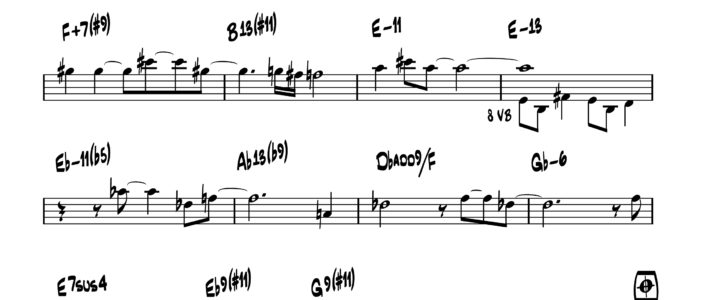
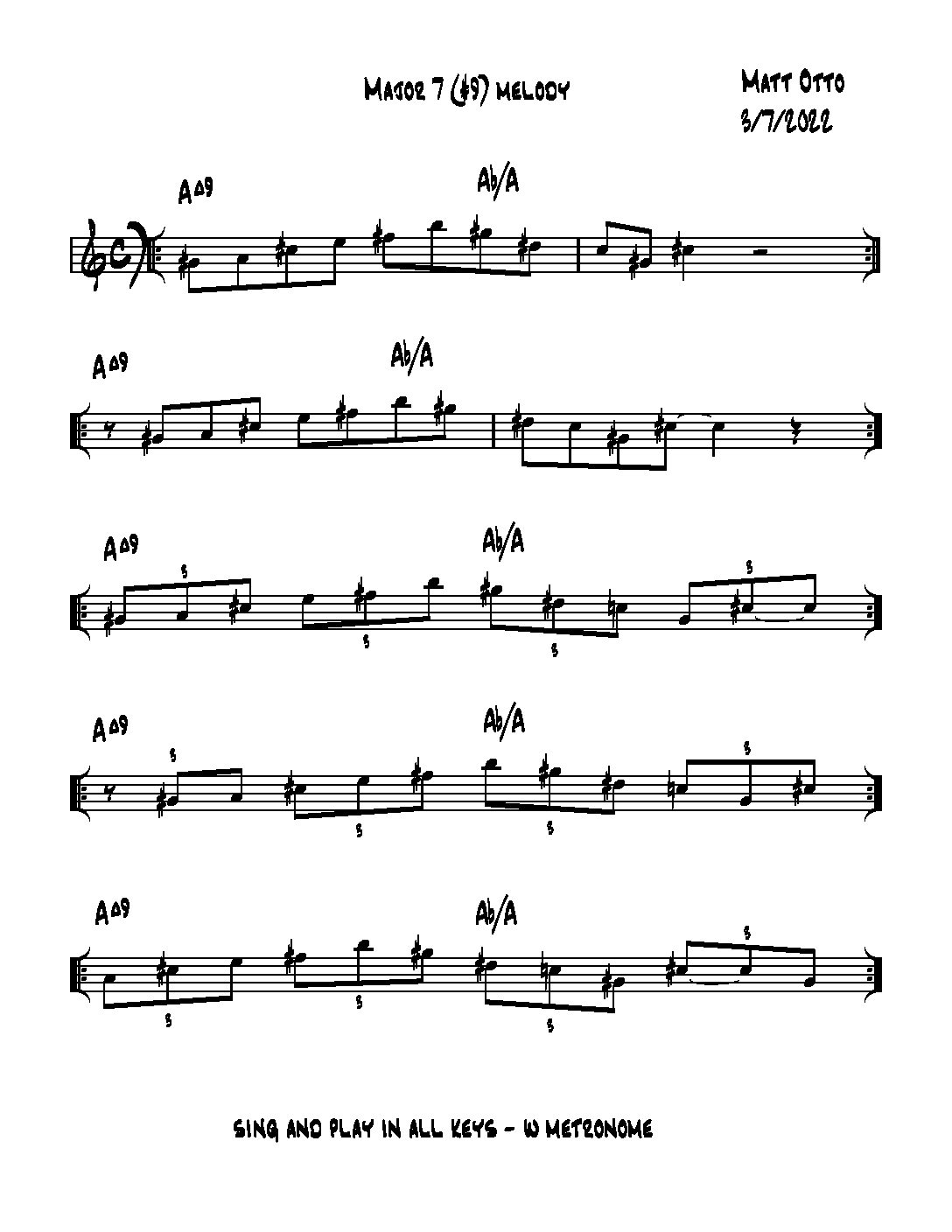
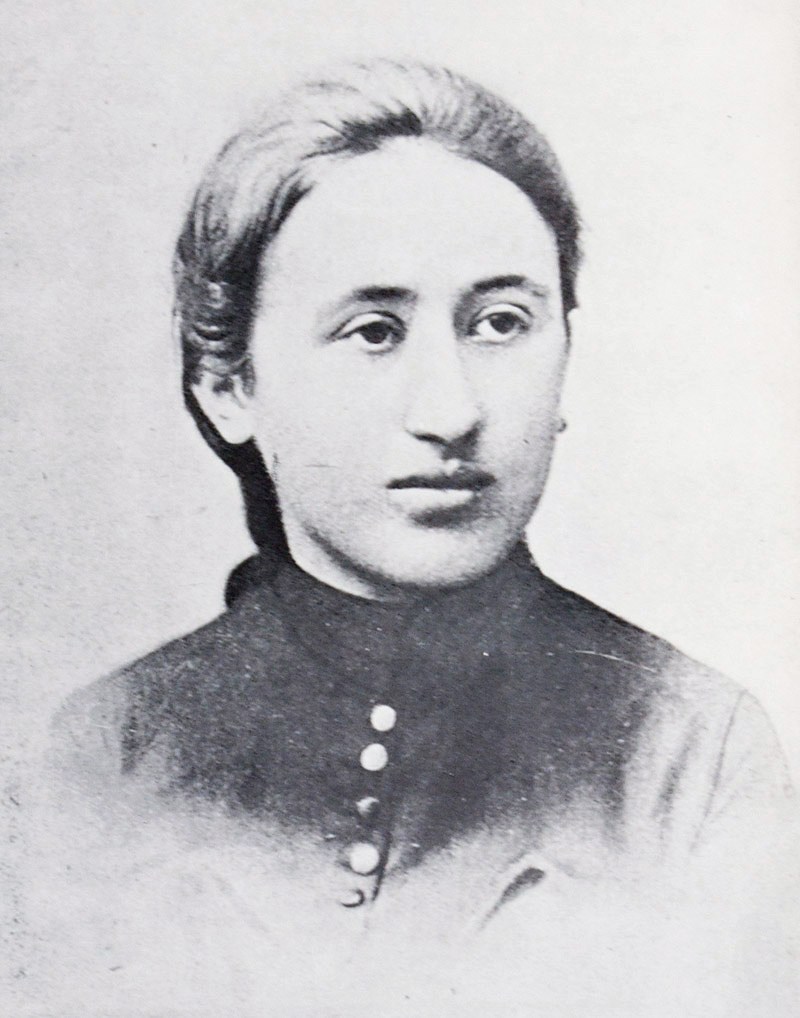
In this lesson we look at a short melody derived from the classical augmented scale ( 1, b3, 3, 5, b6, 7, 1 ) and play it in triplets grouped in 7.  The melody could work in several harmonic contexts but we’ll just look at it in the context of concert A major 7 (#9 b13).  Many improvisers use this scale in it’s various modes to improvise over major, minor and dominant chords.  Bela Bartok
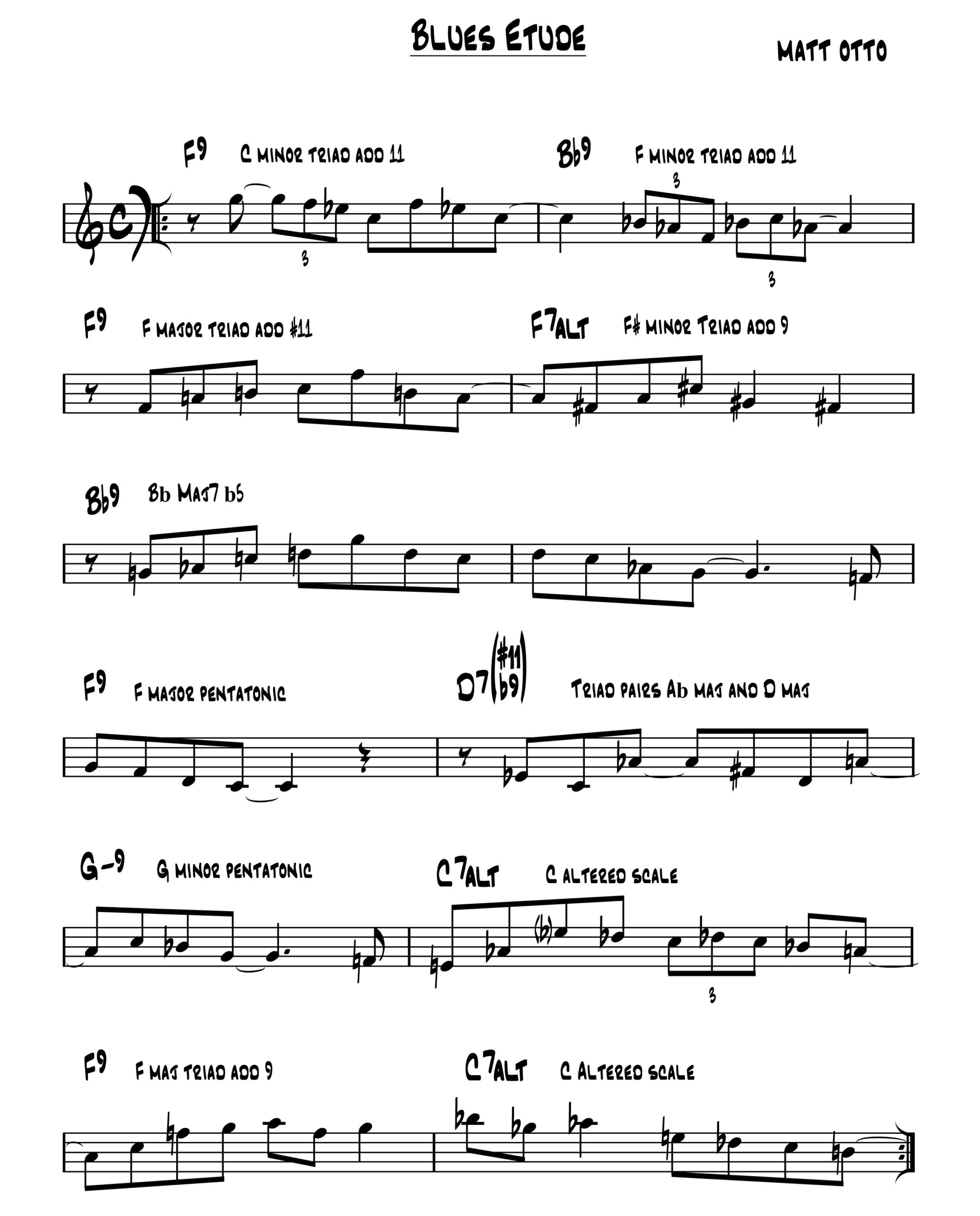
The melody is played in a symmetrical sequence ascending by  minor 6ths yet all the notes are contained in one scale.  This scale, like the diminished scale or the whole tone scale is symmetrical and so 1 scale applies to 3 keys each a major 3rd apart (tri-tonic).  Therefore there are a total of 4 scales each one representing 3 keys.  You can think of the scale as compared to the major scale ( 1, b3, 3, 5, b6, 7, 1 ) or as two augmented triads one half step apart i.e. A+ and G#+ creating the scale covering the keys of A, C# and F.  This is the same scale used in Lesson 7 where the major 7 #5 chords found in the scale are used within a dominant 7 context.  Also, Lesson 56, on Giant Steps uses this scale in the first 8 bars over the tri-tonic progression.

In the video we’ll fist practice the rhythm of the triplets grouped in 7 over 2 bars of 4/4 time with the metronome – just singing.  Than we’ll play the melody slowly rubato over a drone, next with the drone and the  metronome and lastly with a bass and drums play along track at 120 bpm.  If you’re interested in the drum and bass backing track, it is available here at CD Baby for 99 cents.

After you’re comfortable with the melody try improvising from the scale and perhaps find the different triads and 7th chords found in the scale.  You could also play the melody starting on the 1st, 2nd or 3rd triplet of beat 1, 2, 3, or  4 in order to help hear the phrase in a different location in the harmonic rhythm.

~ Enjoy!

~Click Here To Make A Donation. Thank You!~!

~Buy The Bass and Drums Play Along CD~


Lesson 70: Aug Melody PDF


~Click Here To Make A Donation. Thank You!~!

~Buy The Bass and Drums Play Along CD~

Lesson 70: Augmented Melody


Dec 8 2012

Play Along CD – Drum and Bass

This is the first “play along” that I’ve produced for both practicing and teaching.  I’ve been using Drones and Pedals with a metronome for years but now I’ve started using this play along for the same basic purposes.  The bass player Jeff Harshbarger  plays one note (root) for the duration of each excersise while Brian Steever keeps time on the drums.  This allows you to practice anything you’d like over the root; a harmony, singing, visulising, scales, tunes, lines, melodies, or free improvisation.  I’ve only been using these tracks for a short time and I already find them much more stimulating and inspiring than using the drones alone.
This first CD is in 4/4 time at tempos (80, 120 and 200 bpm) and includes roots in every key.  There are several feels, straight, swing, afro-cuban etc… and also a few tracks or drums alone from 80 to 300 bpm.  I’ve included a sample track below that you can try out.  You can click on the photo to purchase the mp3s from CD baby or send me a modest donation with a message and I’ll email you a link directly.

~Enjoy!

32 Bars of Swing in C 120 BPM


~Click Here To Make A Donation. Thank You!~!

~Buy The Bass and Drums Play Along CD~

~Purchase my book: Modern Jazz Vocabulary Vol. 2~

.


~Buy The Bass and Drums Play Along CD~


Mar 6 2012

Skype Lessons

I’ve started doing Skype Lesson formally.   Having taught many Skype lessons over the last few years, I’ve come to believe that Skype is a good way to both teach and learn from the comfort of your own home.  I charge 40$ for one a one hour lesson, and interested folks who are at an intermediate or advanced level can email me to set up a lesson at: ottojazz@gmail.com.

During a Skype lesson I will listen to you play/improvise for a duration and determine a course of study based on what I hear.

Some of my common teaching methods include:

  • Singing and visualising melodies and harmonies over drones.
  • Playing ideas through keys.
  •  Memorising tunes and chord progressions.
  • Displacing melodies rhythmically.
  • Working with a metronome.
  • Singing and playing scales, ideas, melodies, voicings, arpeggios, and  solos.
  • Transcribing, singing, memorising and playing solos through keys.
  • Diatonic harmony.
  • Analysis of standard progressions and songs.
  • Chord-scale theory.
  • Synthetic scale analysis and application in improvisation and composition.
  • Long tones.
  • Overtones.
  • Diaphragmatic Breathing.
  • Establishing an effective daily routine.
  • Writting contra-facts.
  • Compositon.
  • Interval recognition.
  • Harmonic recognition.
  • Singing and playing over progressions and songs.
  • Learning to play by ear.
  • Working on rhythmic feel.
  • Developing a vocabulary.
  • Working towards performance and recording.

I’m also willing to work on specific personal goals and/or problems that an individual may have.

I’m happy to work with people who play any instrument.

Best,

Matt Otto

Reviews:

“Matt Otto is a gifted teacher and a warm-hearted person. I’ve been fortunate enough to study with him and have applied his
teachings to many facets of music-making, from sound production and ear training to improv and composition. I can’t recommend him
highly enough. He’s approachable, friendly, and has a casual way of making difficult concepts easy. His methods and philosophy
are geared toward developing the whole musician and guiding the student in finding their musical “voice”, which has been a joy
to experience first-hand! He’s been a great mentor and I would recommend him to any musician interested in improving the quality
of their playing in a way that is true to the self.”

~Peter Gilli – tenor sax, Rhode Island

.
I have been studying with Matt for over six months now. With his guidance, I’ve been able to move past several musical obstacles allowing me to set new goals as an artist and saxophonist. The bar has been raised, so to speak. His teaching effortlessly encourages growth within the idiom of jazz improvisation, while still maintaining clear awareness of the student as an artist in their own right. Simply put, my lessons with Matt have allowed me to deepen my relationship with music directly.

~Jason Moore – tenor sax, North Carolina www.jasonjmoore.com

.

“I studied with Matt Otto from 2000 to 2006 and during that time, Matt was a true mentor.  In those years of study, I developed an understanding of elemental aspects of sound, rhythm, and musicality that I felt ownership of.  Matt stressed the importance of developing a personal and instinctive command of the instrument, and I credit his teaching style for enabling me to mature from student to artist.  Beyond teaching, Matt  produced and engineered a recording of mine, which helped me win a competitive artist’s grant from UC Berkeley — the funding from this grant payed for my travels and first year expenses moving from California to New York City where I live today.  Learning from Matt and being influenced by him has been a great gift that continues to be a part of who I am both musically and personally.”

~Kenneth Auyeung – Alto Sax, Brooklyn, NYC.


“Studying with Matt is the best. He really taught me how to sing through my instrument, which completely transformed my approach to music.”

~Ryan Seward – Guitar, Los Angeles, CA.


.
“After years of going around in circles in my practice, lessons with Matt finally got me to break through the blocks and rise above the plateaus. His positive, encouraging approach to ear training and teaching jazz improvisation have given me the tools and confidence necessary for any measure of success I’ve reached. In short, Matt has basically taught me everything I know.”

~ Josh Welchez – Trumpet, Los Angeles, CA.


“I have only two regrets about taking lessons with Matt Otto. 1. That when my friends recommended I take lessons with Matt, I had done it sooner and 2. That I didn’t take more advantage of him when he lived in town. Matt is easily the best teacher I’ve ever had regardless of instrument. I’ve never seen anyone with a more clear approach and was so quickly able to get to the my weaknesses. Another one of Matt’s strengths was giving you a way to work on those issues that were really easy to implement. I don’t think I could have asked for more from a teacher.
 With Matt’s help I was able to accepted to the Master’s degree program at Cal Arts for Jazz Studies, a feat which I never could have done without his guidance. For that I’ll always be indebted to him.” (and Sallie Mae).
.
~ Scott Cummings – Drums, Los Angeles, CA.
.

“I recently started playing saxophone again after a 10 year break.  However I was dissatisfied, as many of the issues that bothered me about my playing years ago, where still present such as:  solo’s that lacked thematic direction and did not ‘tell a story’, an over-reliance on ‘hot licks’ and a disconnect between my fingers and ears’ .  I decided I needed to get some help If I was going to make any progress.  After reading Matt’s blog and hearing him play I started taking lesson’s earlier this year and it has led to massive changes in my approach to improvisation and level of musicality.

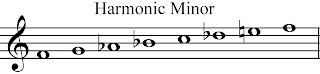
Here are some of the things we worked on:  Slow motion improvisation and using thematic development.  Learning tunes inside out by singing the melody and bass, voice leading, shell & drop 2 voicing’s.  Technical problems with air support and tonguing.  The modes and chords of the Harmonic and Melodic minor scales.  Getting a stronger time feel by using the metronome on the offbeat’s and singing along with Bird solo’s.  Transcribing what I sing in order to strengthen the connection from ear to instrument.  With Matt’s help I finally feel that I am starting to ‘Play what I hear and sing thru the horn’ and I am very happy that I chose Matt for Skype lessons as he is a fantastic teacher, musician and a genuinely nice guy.”

~Robert Gillespi – tenor sax , Edinburgh, Scotland


I had the honor of taking lessons with Matt Otto for an extended period of time beginning in 2008. In addition to being one of my favorite musicians on the planet, Matt is among greatest teachers I have ever had. His approach to learning is focused on the student developing his/her own unique individual voice. He made me aware of how to be honest in my playing. Many of the exercises we did involved singing over a drone (Example: Charlie Parker head). Often I would sing over the drone and transcribe what I sang. This opened up my ear immensely and is one of the best ear training concepts I have learned. I began realizing that the instrument is just an extension of my voice and we worked towards bringing out what I really hearing. Matt knows the balance of being positive and encouraging, yet challenging and demanding. I always left our lessons motivated and excited. Matt is a treasure to the jazz community.

~ Dr. Brandon Bernstein – Guitar, Los Angeles, CA.


“Matt Otto has been an incredible mentor and teacher who’s passion for the music and articulate way of teaching has not only changed the way I play, but also the way I listen and experience music as well.”

~Blake Deibal – Tenor Sax, Kansas City, MO.


“I have studied with Matt Otto and utilized the resources of his music blog for several years.  In my case, as with his other students, he carefully analyzed my level of playing and developed an action plan for improving both my technical skill and my understanding of jazz improvisation and underlying harmonic structure. In addition to his vast knowledge of music and technical expertise, Matt has a very generous spirit that inspires his students to put in the work necessary to reach their individual goals. For players of all levels who wish to improve their jazz improvisation skills, I highly recommend studying with Matt.”

~Frank Martinez – Tenor Saxophone, Pico Rivera, CA.


“Matt Otto played a huge role in helping me understand and feel comfortable with jazz harmony and improvisation.  He broke things down in a way that made sense to me as a singer and a musician. I’m grateful to have had him as a teacher!”

~Sara Gazarek – Vocalist, Los Angeles, CA.


“I was drawn to Matt as a teacher because of my love for his music.  I sought him out, hopeful that his teaching would match the depth of his music.  I was not disappointed.   My lessons with Matt have been musically transformational.  In my experience, he is a rare breed.  His ability to get right at the heart of a musician’s strengths and weaknesses is truly amazing.  He was able to quickly match up my goals with a plan to overcome my weaknesses, in some cases using ‘outside the box’ methods to deal with my stubborness.  He is an incredibly patient and generous person which translates into how he deals with his students.  You could not ask for a better mentor on your musical journey.”

~Jeff Stocks – Guitar, Kansas City, MO.


“Studying with Matt has been a truly eye opening experience for me.  Within minutes of our first lesson, he recognized the holes in my playing and set out a concrete plan on addressing them; the time I have spent studying with him has been the most rewarding and fruitful of my learning career.  The lessons posted on his blog have given me enough material for me to work on for years to come.  I cannot recommend Matt’s teaching abilities enough! Not to mention, he’s a pretty cool guy.”

~Miles Freeman – Tenor Saxophone, Los Angeles, CA.


Jan 19 2013

Lesson 69: A Major

Sometimes working on just one key for a while can be beneficial.  Today I practiced a bit on concert A major -  on tenor sax this is B major, which does not lay well on the horn for me, mainly due to my deficiency using the side A# fingering.  Also, it’s more difficult for me to visualize the 7 modes in this key than compared to concert Bb major.Warne+Marsh+warne

After singing and playing over an A drone for a while, I came up with a simple melody that moves down through the 7 modes of concert A major by diatonic step (all over an A drone).  For rhythmic interest,  each melody is played first as all dotted quarter notes (a 3 over 4 grouping) and than in 8th notes.   I started by singing the exercise until it was easy to hear and visualize and than put it on the horn.

There’s a PDF with the melody for C, Bb and Eb below.

~Enjoy!

Lesson 69: A Major Melody PDF

~Click Here To Make A Donation. Thank You!~!

.


Jan 17 2013

Lesson 68: -7b5 nat 9 nat 13

This is a simple melody that uses the 2nd mode of harmonic major over a -7b5 chord (or half diminished) in one key (concert F#-7b5) which is concert E harmonic major, the 2nd mode being concert F#-7b5(nat9, nat13).

This 2nd mode of harmonic major creates an interesting “bright” sound over half diminished; natural 9 and natural 13. Harmonic Major

The more common locrian mode of the major scale gives you a b9 and b13 on a -7b5 and the popular 6 mode of melodic minor will give you a natural 9 and a b13 over a -7b5.

The 2nd mode of harmonic minor over -7b5 will give you the b9 and the natural 13.

All 4 scales will work nicely over a half diminished chord but this melody just focuses on using the natural 9 and natural 13 sound (2nd mode of harmonic major).

Here’s a simple chart that should help make it clear:


F#-7b5 (b9,b13) = F# locian (G maj scale 7th mode) F#, G, A, B, C, D, E, F#
F#-7b5(nat9,b13) = 6 mode of A melodic min F#, G#, A, B, C, D, E, F#
F#-7b5(b9, nat13) = 2nd mode of E harmonic min F#, G, A, B, C, D#, E, F#
F#-7b5(nat9,nat13) = 2nd mode of E harmonic maj F#, G#, A, B, C, D#, E, F#

The intro and outro clips in the video are short improvisations using this 2nd mode of harmonic major i.e. concert E harmonic major, 2nd mode = F#-7b5(nat9, nat13).
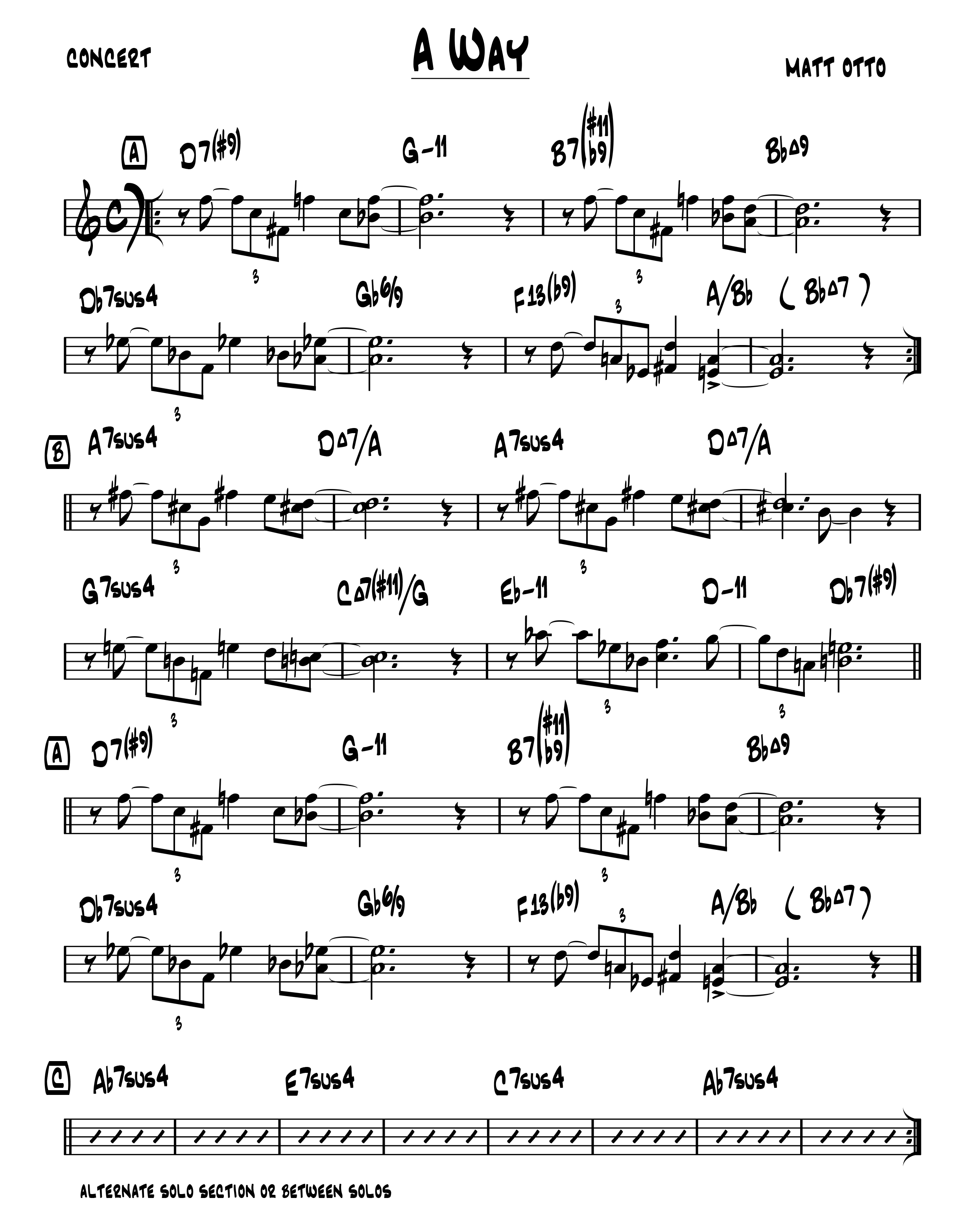
The short melody in the lesson uses a grouping of 7/8 over 4/4 and is a sequential melody descending by diatonic 3rds through the mode (cycle 6 in Mick Goodrick’s system).
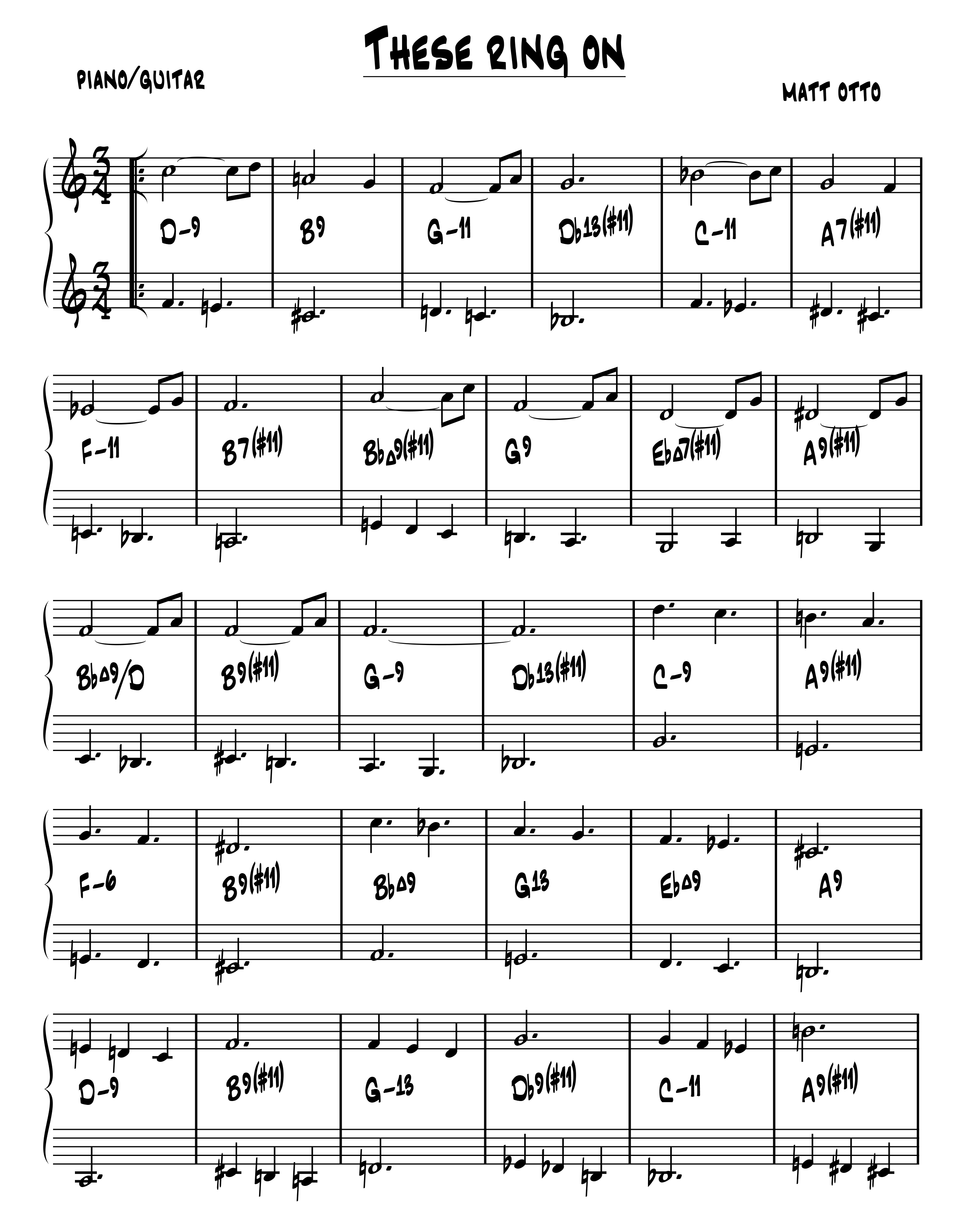
Try singing the melody over a drone or the F#-7b5 chord until it feels comfortable than play idea on your instrument.  After try improvising freely with the mode.

For more an introduction on the use of the 7 modes of harmonic major, you can pick up my book on the topic here.

~Enjoy!

Lesson 68: -7b5(nat 9,nat 13) PDF

~Click Here To Make A Donation. Thank You!~!

~Purchase my book: Modern Jazz Vocabulary Vol. 1~

~Purchase my book: Modern Jazz Vocabulary Vol. 2~

.


~Click Here To Make A Donation. Thank You!~!

~Purchase my book: Modern Jazz Vocabulary Vol. 1~

~Purchase my book: Modern Jazz Vocabulary Vol. 2~


Jan 15 2013

Lesson 67: min triad add 9

This ii-7, V7, I melody that uses minor triads with an added 9th (or 2nd) i.e. 1,3,5,9 or 1,9,3,5 etc…Stefon_Harris

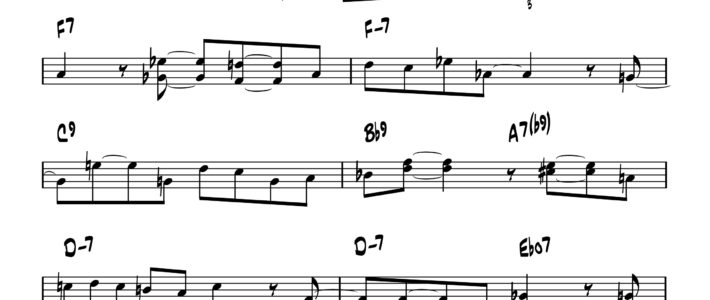
The first part of the melody uses a minor triad with the added 9 over the ii chord (D-7 would use a d minor triad with the 9th “E” added).  The second part of the melody uses the minor triad with an added 9th one half step above the root (G7 would use an Ab minor triad with the 9th “Bb” added) or a tritone away from the first triad.   This triad with added 9 over the dominant produces an “altered” sound giving you b9, #9, 3 and #5 on the dominant and comes from the 7 mode of melodic minor or altered scale).  The line resolves to the 5th of the I chord…  Try singing the line slowly at the piano to learn to hear it well before playing it on your primary instrument.
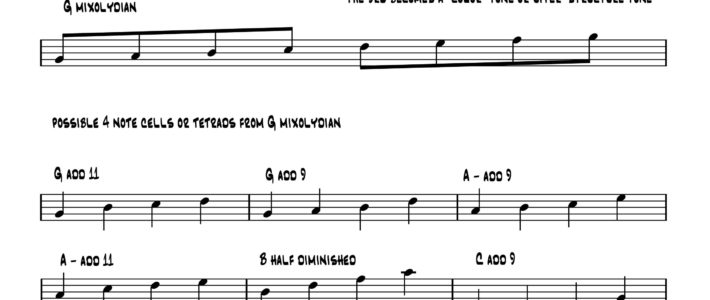
My friend Miles mentioned to me that Stefon Harris refers these triads with any single added note as “quadrads”.  A quadrad can basically be thought of as a 4 note scale.

Once you’ve worked on this simple melody through the keys try improvising using the 4 note “quadrads” over the same ii – V – I progression.  Last, try to use the quadrads over a standard or original you enjoy improvising on.  This should help the new sound eventually become part of what you hear.

~Enjoy!

Lesson 67: minor triad add 9 PDF

Lesson 67 Play along

~Click Here To Make A Donation. Thank You!~!

~Purchase my book: Modern Jazz Vocabulary Vol. 1~

~Purchase my book: Modern Jazz Vocabulary Vol. 2~

.


.

~Click Here To Make A Donation. Thank You!~!

~Purchase my book: Modern Jazz Vocabulary Vol. 1~

~Purchase my book: Modern Jazz Vocabulary Vol. 2~


Jan 3 2013

Lesson 66: Minor Major 9

This is a simple minor major nine melody I started hearing in my head a few days ago.  It’s nothing special but I enjoyed singing it and working it slowly through the keys.  Sometimes it’s the simplest ideas that help me connect with my ear and get me out of my “thinking mind” while playing.  Often when I’m practicing something like this, since the content has been determined ahead of time, I can focus on other elements of the improvisational 16xthe7melodicminormodesprocess such as sound, breath, feel, staying relaxed, posture, and listening.

This melody comes from the ascending melodic minor scale.

There’s a PDF of the melody and an mp3 midi play along as well.


~ Enjoy!

Lesson 66: Min Maj9 PDF

Lesson 66 play along


~Click Here To Make A Donation. Thank You!~!

.


~Click Here To Make A Donation. Thank You!~!

~Purchase my book: Modern Jazz Vocabulary Vol. 1~

~Purchase my book: Modern Jazz Vocabulary Vol. 2~


Dec 23 2012

Gig w John Stowell

John Stowell, a wonderful guitar player from Portland Oregon came out to Kansas City and we played a clinic, gig and session together. Here’s a few tunes that I recorded using my little mp3 recorder.

~ Enjoy!


w Gerald Spaits on bass and Brandon Draper on drums:


I Should Care

You Stepped Out of a Dream

Prelude to a Kiss


With Ben Leifer on bass and Brian Steever on drums:


Soul Eyes

Red


Nov 25 2012

Double EP

This first group of songs was recorded in 2002 for a demo with Bruce Saunders (guitar), Mark Ferber (drums), and Yoshi Waki (bass).   Mostly modern “standards” plus the first recorded version of  “End Class” which I later re-wrote and recorded on “La Commune”.

Nica’s Dream (Horace Silver)

Moments Notice (Coltrane)

Round Midnight (Monk)

End Class (Matt Otto)

Satellite (Coltrane)


This second recording is a 3 tune demo that was recorded in 2006.  We did some popular tunes,  including Hoagy Carmichael’s 1941 hit “Skylark”,  which he supposedly wrote for Bix Beiderbecke, plus two rock adaptations, Waltz Number One (Elliot Smith) and Eleanor Rigby (Beatles).  Playing here are three more of my favorite musicians and people:  Storm Nilson  (guitar),  Jason Harnell (drums) and David J. Carpenter (bass).

~Enjoy!


.

Skylark

Waltz Number One

Eleanor Rigby


~Click Here To Make A Donation. Thank You!~!

~Purchase my book: Modern Jazz Vocabulary Vol. 1~

~Purchase my book: Modern Jazz Vocabulary Vol. 2~


Nov 24 2012

Lesson 65: Stage Fright

Some of my students and many professional musicians and hobbyists that I know, experience a lot of stress, anxiety and general nervousness prior to, and during music performance.

This short post will examine  a few strategies that I have used over the years to help me work with stage fright and performance anxiety.  Sometimes, when you least expect it, you get nervous, while other times you feel like your hanging out with good friends in a relaxed environment – eventually you can be comfortable with either.

Things to think about:

1. Be prepared musically.  This is the most important issue – practice the material, memorise it if appropriate, work on it until you can play it correctly over and over with very little effort.  If you suffer badly from stage fright than include rehearsing the stage banter you will use during the performance; write it out, memorise it, and practice performing it.  These two things will not ensure you will play perfectly, but they will increase your odds tremendously if and when your attention becomes taxed or divided.  Being nervous is fine as long as it does not keep you from playing well and enjoying the experience.

2. Practice feeling nervous.  I learned this simple trick from a great book on playing under stressful conditions, “Performance Success” by Don Greene.  Basically, seconds before you work on something you will perform, get your heart rate way up by doing  a long set of fast jumping jacks, berpees,  jump squats or mountain climbers , then immediately play the piece or improvisation on your instrument.  This does a great job emulating the effects of adrenalin (the fight or flight bio-chemical that makes us feel so nervous).   This exercise will help you get used to the feeling of “nerves” and help you learn to focus extra energy into awareness and concentration instead of fear. You will begin to realise that even when your heart is racing, you can still play and improvise well and that the increased heart rate might actually elevate your technique and emotional content.  After doing this many times, the effects of adrenaline will feel less unusual and much more like a normal state of performance.

3. Research stage fright and performance anxiety.   Here are some of the books I have read and recommend, “Performance Success“, by Don Greene, “Stage Fright” by Kato Havas, ” The Inner Game of Muisc” by Barry Green,  “On Piano Playing” by Abby Whiteside, “Effortless Mastery” by Kenny Werner, “Zen Mind Beginners Mind” by D.T. Suzuki.  All these books and countless others can give you the gems of wisdom that will slowly, over time, begin to eliminate your fear and performance anxiety.  Eventually you recognise the nerves as good energy that will help to heighten your awareness and concentration.

4. Deep Breath.  Slow, deep breathing will clam you and even out your energy and focus.  One simple way is to breath deep, tense up all your muscles and hold them as tight as possible for about 10 seconds than let go and start to breath  in and out to a slow count of 10  – about 10 seconds in and 10 seconds out.  While breathing and counting, relax and observe muscle tension.  Doing this up until the first note of performance will go along way towards creating a calm, focused state of  mind and body.

5. Shift your focus from yourself to those around you.  While preparing to play, focus on others; the audience, friends, family, the rest of the musicians performing with you.  While actually playing, listen to the other musicians more than yourself, be aware of the audience, look at them, make some eye contact. .. it may be difficult and uncomfortable at first but practice it each time you perform and you’ll get better at it – more comfortable and more relaxed.  If you can maintain slow deep breathing while doing this, all the better.

6. Take on an open (non defensive) posture.  Deliberately keep your arms open (not crossed), your back straight, your chin up, your legs open (not crossed), in other words, take on open postures.  Open postures will help tell your mind and body that “all is well” and that there is no danger, nothing to fear.  Over time, this will help you accept the nervous energy as a “positive” experience and as completely “normal”.   Your posture may feel forced but if you stick with it, over time, it will become natural.  Copying the postures of performers you admire can be a short cut to finding a higher comfort level on stage.

7. Take a class on public speaking or acting.  A inexpensive class at a community college can be more challenging and helpful towards overcoming performance anxiety than playing an instrument on stage.  If you take a few classed on public speaking, or acting, playing music will become much easier and your comfort on stage will increase immensely.  There is also the option of joining an inexpensive speech club like Toast Masters.

I’ve also found some useful information in the videos below.  Just watching through them in the days leading up to an important gig can help you prepare for a relaxing performance.

~ Enjoy!


~Click Here To Make A Donation. Thank You!~!

~Purchase my book: Modern Jazz Vocabulary Vol. 1~

~Purchase my book: Modern Jazz Vocabulary Vol. 2~


Oct 30 2012

Lesson 64: Book ii-V-I

~click to purchase~

In this lesson we’ll look at the first ii – V7 – I melody found in the “Modern Jazz Vocabulary vol. 2” book.  This melody is comprised of major 1st inversion triads descending by half steps and a few chromatic passing tones at the end.  The melody is also grouped in 6 against the harmonic rhythm in 4/4.   The descending triads end up outlining some nice tensions over the the ii – V7 – I progression.  Although this is a melodic sequence it is still loosely based and George Garzone’s Triadic Approach which I recommend checking out.   In the video I play this short  melodic phrase through the 12 keys at both a med and med up tempo.  Remember to work on this and all the material from the blog from memory as much as possible.  I believe it’s better to learn the idea from memory in one key than to read it in 12 keys.

~Enjoy!

Lesson 64: ii-V-I From Vol.2 Book PDF

Lesson 64: Play Along 120 BPM mp3

Lesson 64: Play Along 180 BPM mp3


Modern Jazz Vocabulary Vol. 2 Is an in depth study of classic II-V-I progression found commonly in jazz improvisation. The nearly 300 melodic examples incorporate rhythmic groupings, triad pairs, enclosures, chromatics, synthetic scales, chord substitutions and more.

“…I can definitely use this book for myself and my students.”

~Bob Sheppard (sax).

“…a very direct and clear approach.”

~Steve Cardenas (guitar)

.

~Click Here To Make A Donation. Thank You!~!

~Purchase my book: Modern Jazz Vocabulary Vol. 1~

~Purchase my book: Modern Jazz Vocabulary Vol. 2~


Oct 24 2012

Lesson 63: Nat 9 ~ Flat 9

In lesson 63 we look at a simple melody that uses both the natural 9 (the #11) and the b9 on a dominant 7th chord.  Within the first bar of this melody a major triad a whole step above the root is present.  Somtimes this is refered to as an upper structure triad since it outlines some of the notes above the root, 3rd, 5th and 7th of the chord (in this case the 13th, the 9th, and the #11th).

The resolution melody in bar 2 does not contain a 3rd or a 7th so you could conceivably play this idea over a major, minor or dominant 7th chord.  It can be interesting to improvise over a chord using just the root, 5th, 9th and 13th – creating a nice open sound (you can hear this concept used by many great improvisers such as Art Tatum, Monk, and Dexter Gordon).

There is a play along mp3 below to help you hear the harmonic context of the melody and also a “sing along” mp3 with the melody for ear training, singers, or those suffering from RSI or carpal tunnel syndrome.  In the video I first play the resolution melody (5, 13, 9, 13, 5, 9) in the second bar of the play along through the keys.  Next I play just the V7 melody resolving just to the 5th of the resolution chord through the keys and lastly I play the whole melody through the keys.


~Enjoy!


Lesson 63: nat 9 – b9  PDF


Lesson 63: Sing Along 80 BPM

Lesson 63: Sing Along 140 BPM

Lesson 63: Play along 80 BPM

Lesson 63: Play along 140 BPM


~Click Here To Make A Donation. Thank You!~!

~Purchase my book: Modern Jazz Vocabulary Vol. 1~

~Purchase my book: Modern Jazz Vocabulary Vol. 2~


~Click Here To Make A Donation. Thank You!~!

~Purchase my book: Modern Jazz Vocabulary Vol. 1~

~Purchase my book: Modern Jazz Vocabulary Vol. 2~